Learning Outcomes
i. Describe the processes of swallowing and peristalsis.
ii. Identify the enzymes active in different regions of the alimentary canal.
iii. Relate the enzymes to their specific substrates and resulting products.
Summary of Lesson
In this lesson, we’ll delve into the incredible orchestration of swallowing and peristalsis, which move food through the alimentary canal. We’ll also unravel the complex web of enzymatic activity that takes place in different parts of the digestive system, breaking down food into nutrients the body can use.
i. Swallowing and Peristalsis: The Conveyors of Digestion
Swallowing: The voluntary act of moving food from the mouth to the esophagus.
Peristalsis: The involuntary waves of muscle contraction that move food along the alimentary canal.
Swallowing and peristalsis are two coordinated processes vital for moving food from the mouth through the alimentary canal to the stomach.
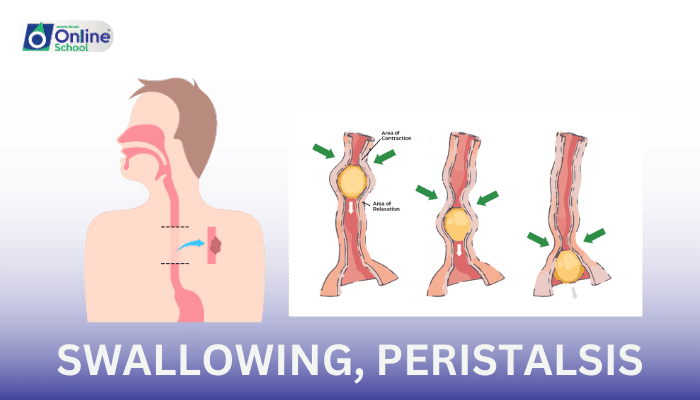
Swallowing, also known as deglutition, is the process that moves food from the mouth into the esophagus. It begins voluntarily when the tongue pushes food to the back of the mouth, triggering a complex reflex that propels the food into the oropharynx (the back part of the throat). Here's where the involuntary phase kicks in – the epiglottis, a small flap of tissue, closes off the trachea (windpipe) to ensure food enters the esophagus and not the respiratory tract.
Once the food is in the esophagus, the second key process, peristalsis, takes over. Peristalsis is an involuntary action involving rhythmic, wave-like muscle contractions that push the food down the esophagus. These contractions occur throughout the entire alimentary canal, not just the esophagus, effectively pushing the food along the digestive tract.
The walls of the esophagus are lined with muscles that contract in sequence – as one section contracts, the next section relaxes, creating a ripple effect that gently moves the food along. This movement is so powerful that it can carry food to your stomach even if you were standing on your head.
Peristalsis doesn't just help with swallowing; it's also crucial later in the digestive process. After food leaves the stomach and enters the intestines, peristalsis continues to move the partially digested food along, allowing further digestion and absorption of nutrients until the remaining waste is eventually excreted from the body.
Both swallowing and peristalsis are essential to digestion, ensuring that food moves safely and efficiently from the mouth to the stomach for further digestion. Without these processes, it would be challenging to get nutrients from the food we eat.
ii. Enzymes: The Catalysts of Digestion
Mouth (Salivary Amylase): Begins the breakdown of starch into maltose.
Stomach (Pepsin): Initiates the digestion of proteins into peptides.
Small Intestine (Pancreatic Enzymes)
Amylase: Continues the breakdown of starch.
Proteases: Further digest peptides into amino acids.
Lipases: Digest fats into fatty acids and glycerol.
iii. Enzymatic Action and Nutrient Absorption
Substrates to Products: Understanding how enzymes transform the food we eat into absorbable units.
List of Important Questions for Self-Study
i. How does swallowing differ from peristalsis?
ii. What role does salivary amylase play in carbohydrate digestion?
iii. How are proteins broken down in the stomach?
iv. What is the function of enzymes secreted by the pancreas?
Important Terminologies Used in Lesson
i. Swallowing: The process of making food move from the mouth to the esophagus.
ii. Peristalsis: Rhythmic contractions in the walls of the alimentary canal that move food along.
iii. Enzymes: Proteins that speed up chemical reactions in the body.
iv. Substrates: The substances on which enzymes act.
v. Products: The substances enzymes produce during a chemical reaction.
